Travel Guides
Getting Around Dubai Without a Car: Metro, Tram, Bus and Taxi
Dubai is easier to navigate on public transport than most visitors expect. Here is how the Nol card, the two metro lines and the taxi system fit together.
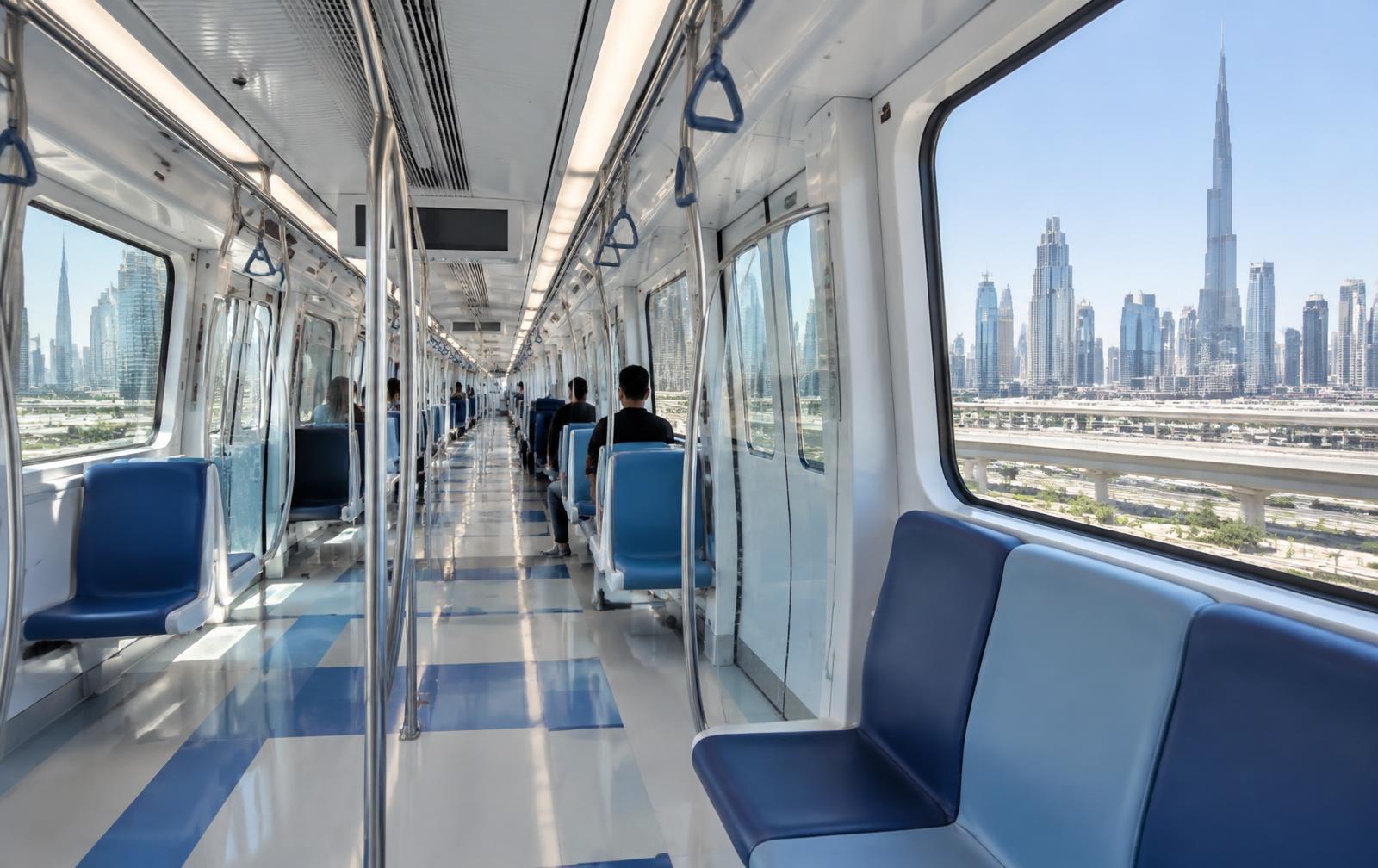
Dubai looks like a city built for cars, and to a large extent it is. But the parts most visitors want — Downtown, Dubai Marina, Deira, the Creek, the airport — sit along two metro lines, and everything in between is covered by cheap, metered taxis.
This guide explains the ticketing system first, because that is where most first-time visitors lose time, then the individual modes and when each one is worth using.
Start with a Nol card
Nol is the prepaid card used across the Dubai Metro, tram, public buses and water buses. You buy one at any metro station ticket office or vending machine and top it up with cash or card. Without one you cannot pass through the gates.
- Silver Nol — the standard visitor card, works on every public mode.
- Red ticket — a paper card for one to ten trips; fine for a single airport transfer, awkward for a week.
- Gold Nol — same journeys, gold-class metro carriage, roughly double the fare.
The metro: two lines, and where they actually go
The Red Line runs roughly along Sheikh Zayed Road from the Expo area through Dubai Marina, the Mall of the Emirates, Downtown and Burj Khalifa, into Deira and out to Dubai International Airport Terminals 1 and 3. The Green Line loops through older Dubai — Deira, the Creek, Al Fahidi and Oud Metha — and crosses the Red Line at two interchanges.
Trains are driverless, air conditioned and frequent. The practical limitation is the last mile: stations on Sheikh Zayed Road are often a long, hot walk from where you are actually going, and pedestrian routes are not always obvious. Plan on a short taxi or a footbridge walk at the end of many journeys.
- The first carriage is reserved for gold-class ticket holders; the next is women and children only. Both are clearly marked on the platform.
- Eating and drinking on the metro is prohibited and the rule is enforced.
- Peak-hour trains toward Marina in the evening are genuinely full.
Tram, buses and water transport
The Dubai Tram loops around Dubai Marina and JBR and connects to the Red Line at two points. It is slow but useful if you are staying in the Marina towers.
Public buses fill the gaps the metro misses, including to areas like Jumeirah and parts of Al Quoz, and the intercity E-series buses run to Abu Dhabi and the northern emirates from Ibn Battuta and Al Ghubaiba stations.
On the Creek, the traditional abra crossing between Deira and Bur Dubai is one of the cheapest and best short rides in the city. Air-conditioned water buses run the same routes for a little more.
Taxis and ride-hailing
Metered cream taxis are widely available, regulated, and inexpensive by European or North American standards. Ride-hailing apps also operate and are convenient late at night or in areas with poor pedestrian access.
| Trip | Usual best option | Why |
|---|---|---|
| Airport Terminal 3 to Downtown | Metro Red Line or taxi | Metro is far cheaper; taxi wins with luggage or after the metro closes |
| Downtown to Dubai Marina | Metro Red Line | Direct, avoids Sheikh Zayed Road traffic |
| Deira to Bur Dubai | Abra across the Creek | Faster and more enjoyable than driving around |
| Anywhere to Jumeirah beaches | Bus or taxi | No metro station within comfortable walking distance |
Timing and the heat
From roughly June to September, daytime heat and humidity make even a ten-minute walk between a station and a mall entrance unpleasant. Between November and March, walking between metro stations and attractions is comfortable for most of the day.
Metro operating hours differ on Fridays and change during Ramadan and public holidays. If you have an early flight, confirm the first train of the day rather than assuming.
Common questions
- Can I use a contactless bank card instead of a Nol card?
- Payment options have been expanding, but the Nol card remains the standard method across metro, tram and bus. Check the RTA website for the current position before relying on a bank card at the gates.
- Is the metro connected to both airport terminals?
- The Red Line serves Terminal 1 and Terminal 3 at Dubai International. Terminal 2 and Al Maktoum International are not on the metro; use a bus or taxi.
- Do I need a car in Dubai?
- For a typical city trip, no. A car becomes useful mainly for desert trips, the east coast or travelling between emirates at your own pace.
Sources and official references
Rules, fares, timetables and prices change. These are the official bodies to check before you rely on anything time-sensitive here.
About the author
RealTripGuides Editorial Team
Editorial desk
Guides published under this byline are written and edited in-house. Where a guide is based on a personal visit we say so in the text, and where it is desk research compiled from official operators and government sources we say that instead. We do not invent travel experiences, credentials or quotes.
All guides by this authorKeeping this guide accurate
This page was last reviewed on 28 August 2026. If something here is out of date or wrong, please tell us — we will correct it and note the change.
Report an error or an updateRelated guides
Itineraries
A Realistic Three-Day Dubai Itinerary
Three days is enough for old Dubai, modern Dubai and one slow day — if you stop trying to see everything.
Updated 20 August 2026 · 8 min read
Budget Travel
Visiting the UAE on a Modest Budget
Dubai is expensive if you let it be. Transport, food and timing are the three levers that matter.
Updated 27 August 2026 · 6 min read
Things to Do
Abu Dhabi as a Day Trip from Dubai: What Fits and What Doesn't
The bus takes roughly two hours each way. That constraint decides your whole day, so plan around it rather than against it.
Updated 15 August 2026 · 7 min read